Bluetooth Speakers From China Fail FCC Verification: FCC ID Match, Firmware Drift, and UN38.3 Battery Cell Checks

ChinaSecurely Bluetooth speaker FCC ID match firmware drift and UN38.3 cell mismatch verification checklist refreshed 2026-08-09

Short answer A Bluetooth portable speaker from China that gets pulled from a marketplace, refused entry at US customs, or fails to pair reliably with the buyer’s phone almost always fails on one of three things: the FCC ID on the label does not match the ID on the FCC database for that SKU, the … Read more

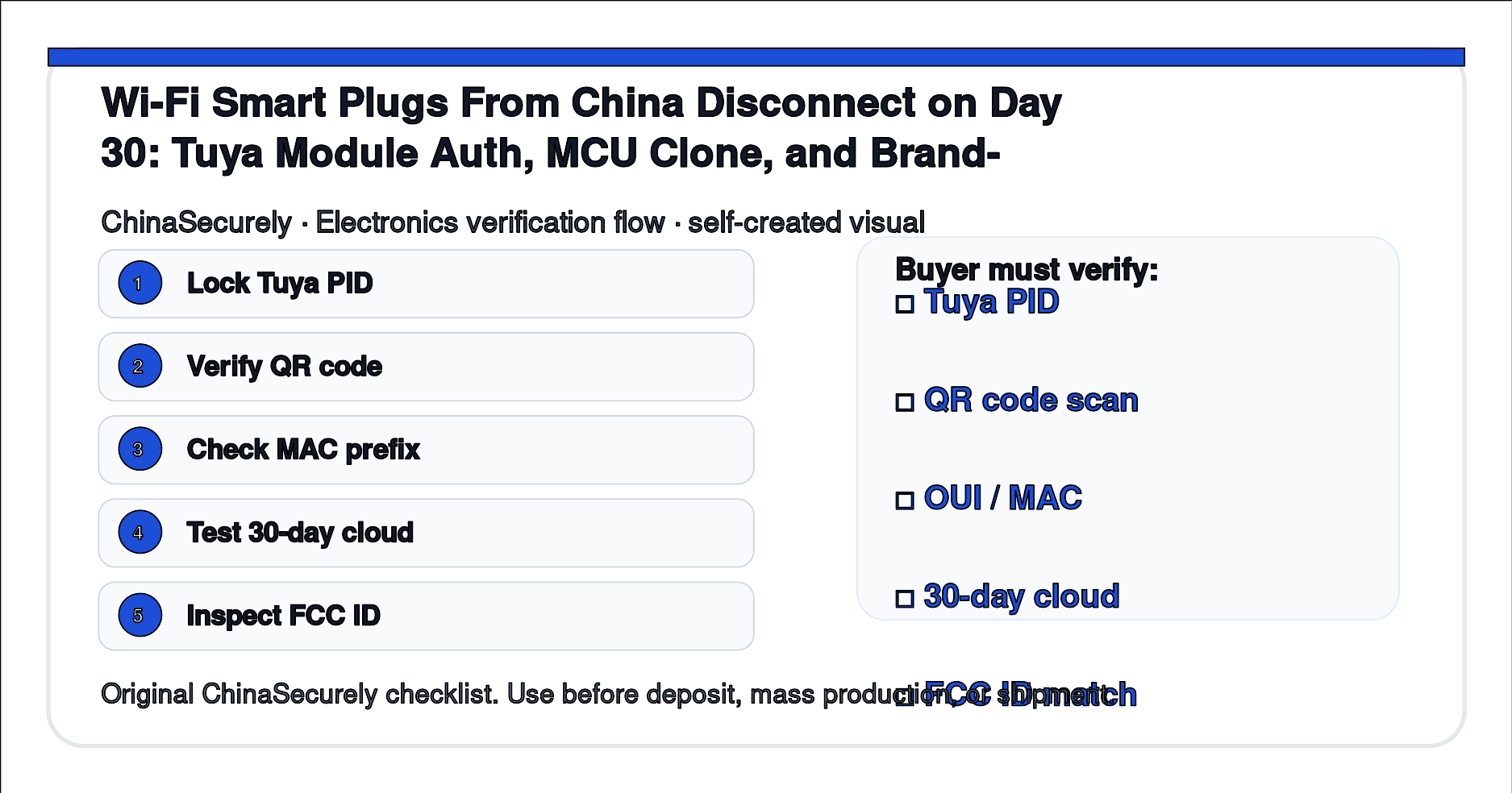
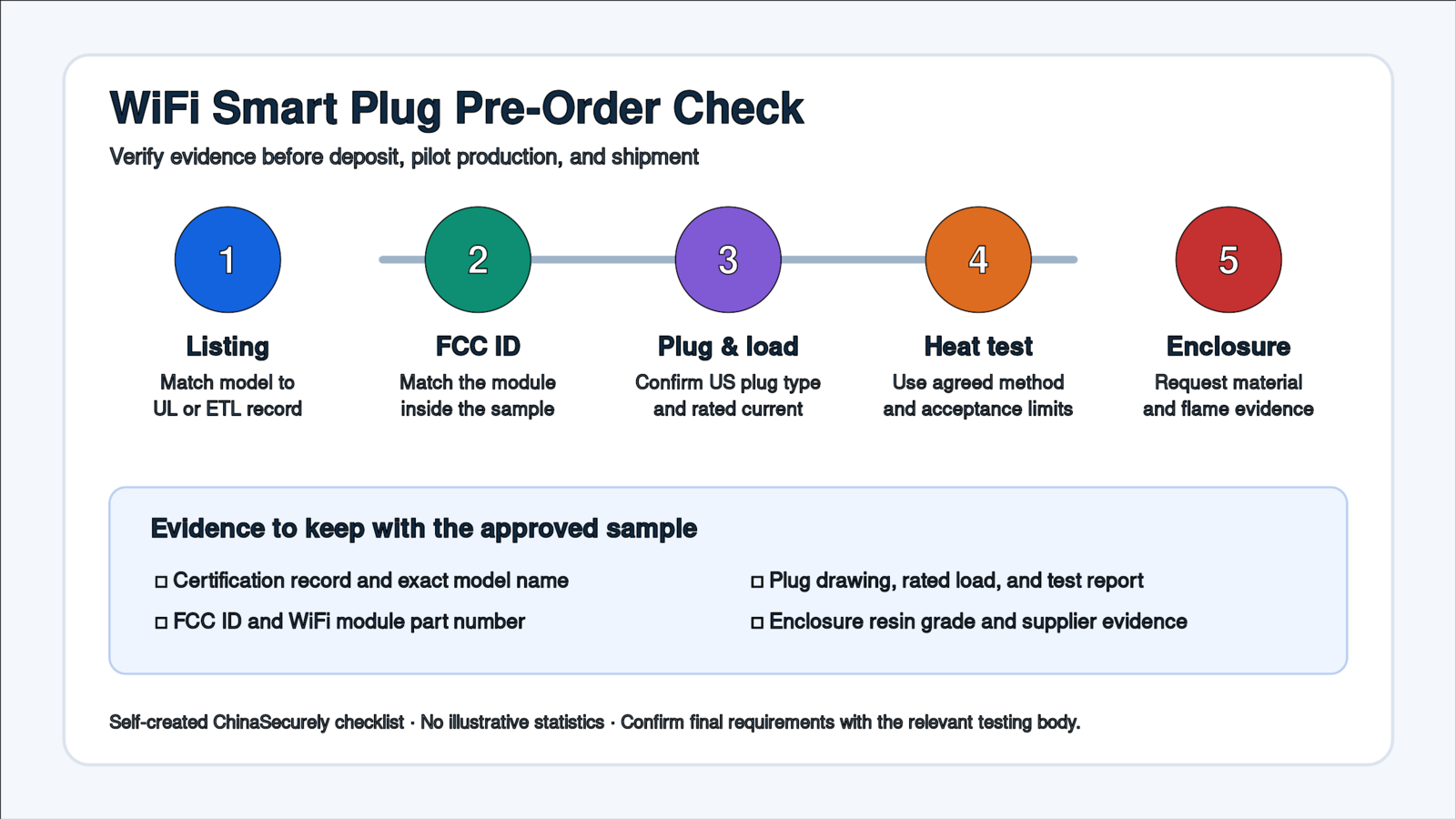
Wi-Fi Smart Plugs From China Disconnect on Day 30: Tuya Module Auth, MCU Clone, and Brand-Lock Checks

ChinaSecurely Wi-Fi smart plug Tuya module authentication and brand-lock verification checklist for small importers

Short answer: a Wi-Fi smart plug that pairs in your showroom can disconnect from the app on day 30 because the factory quietly swapped a Tuya-authorized module for a third-party clone. Cloud authentication fails, the plug shows offline, and the importer is on the hook for 800 RMA tickets. Here is how to lock the … Read more

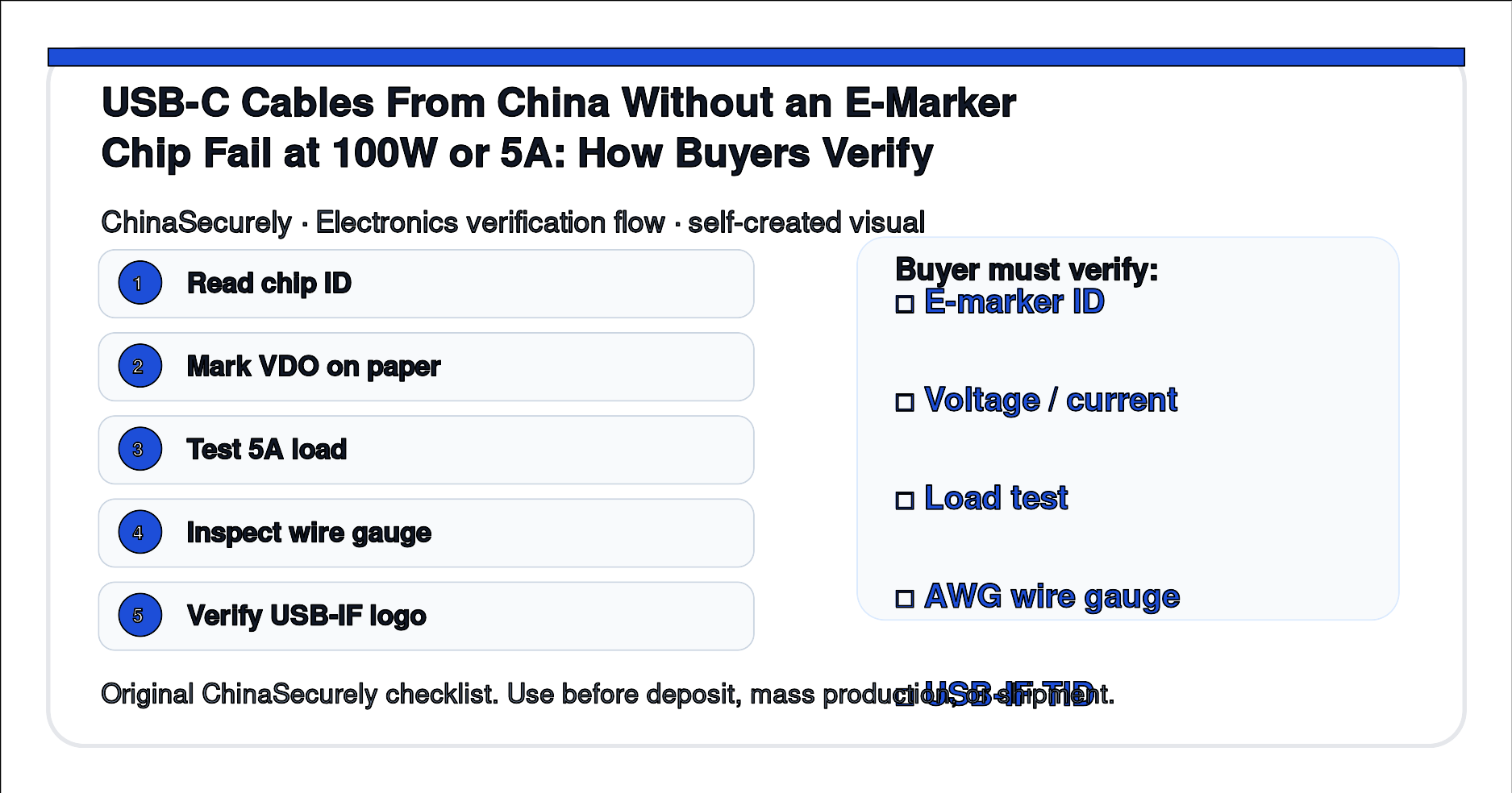
USB-C Cables From China Without an E-Marker Chip Fail at 100W or 5A: How Buyers Verify Before Bulk Order

ChinaSecurely USB-C e-marker chip verification checklist for small importers

A USB-C cable that won’t carry 100W isn’t dangerous — it’s just mislabeling. The cable looks correct, the connector shell is correct, the box advertises 100W or “PD 3.0.” Then you plug it into a 100W USB PD charger and the charger falls back to 60W. Or worse, the laptop refuses to charge at all. … Read more

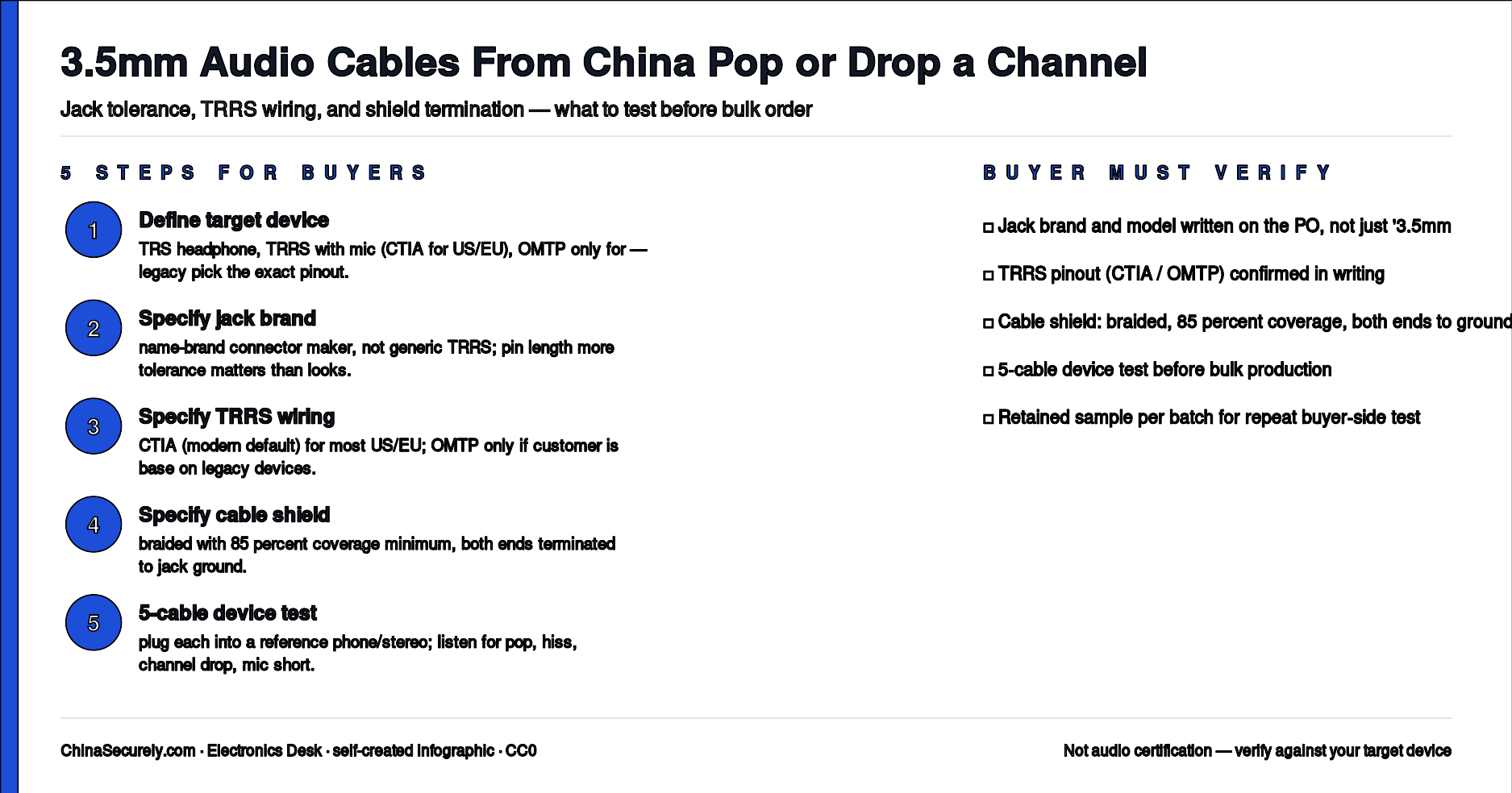
3.5mm Audio Cables From China Have Loud Pop or Channel Imbalance: Jack Tolerance, Cable Shielding, and a Buyer-Side Test

ChinaSecurely infographic showing five steps for buyers to verify jack brand, TRRS wiring, and cable shield for 3.5mm audio cables from China.

Short answer: a 3.5mm audio cable that looks identical to a known-good cable can still pop, hiss, or play only one channel because of three things the eye cannot see: jack pin length tolerance, TRRS wiring order, and shield termination. Test each cable class on a known reference device before you bulk order, especially if … Read more

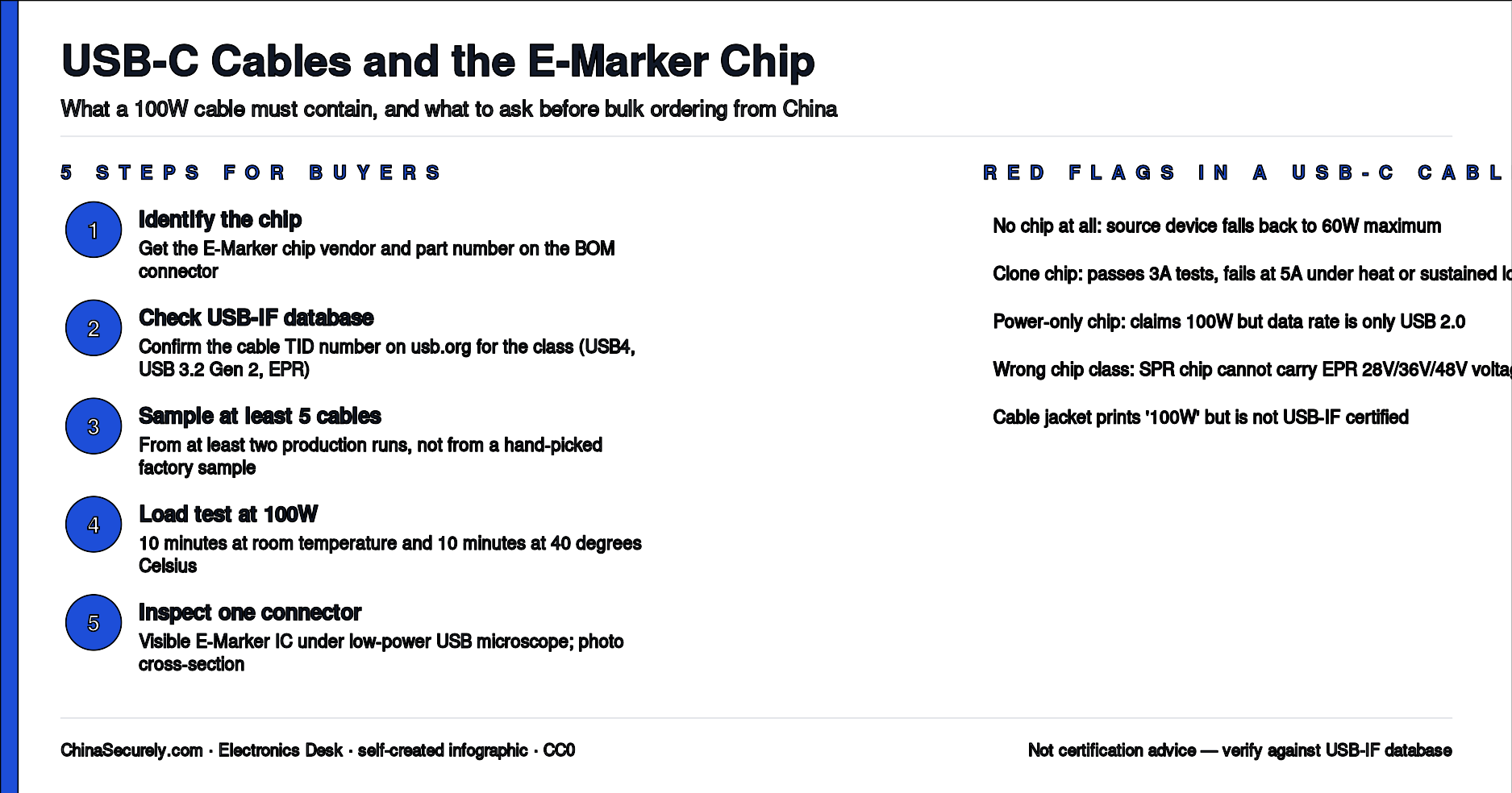
USB-C Cables From China Fail 100W Charging: E-Marker Chip Missing or Counterfeit, and a Safer Cable Buy

Five-step verification flow for checking whether a USB-C cable from China actually contains a real E-Marker chip and supports 100W charging, plus five red flags buyers should watch for.

Short answer: not every USB-C cable that prints “100W” or “USB PD” on the jacket actually carries 100 watts safely. The hidden piece that lets a USB-C cable carry more than 60 watts or 5 amps is an E-Marker chip inside the connector, and many Chinese suppliers ship cables without one, with a counterfeit chip, … Read more

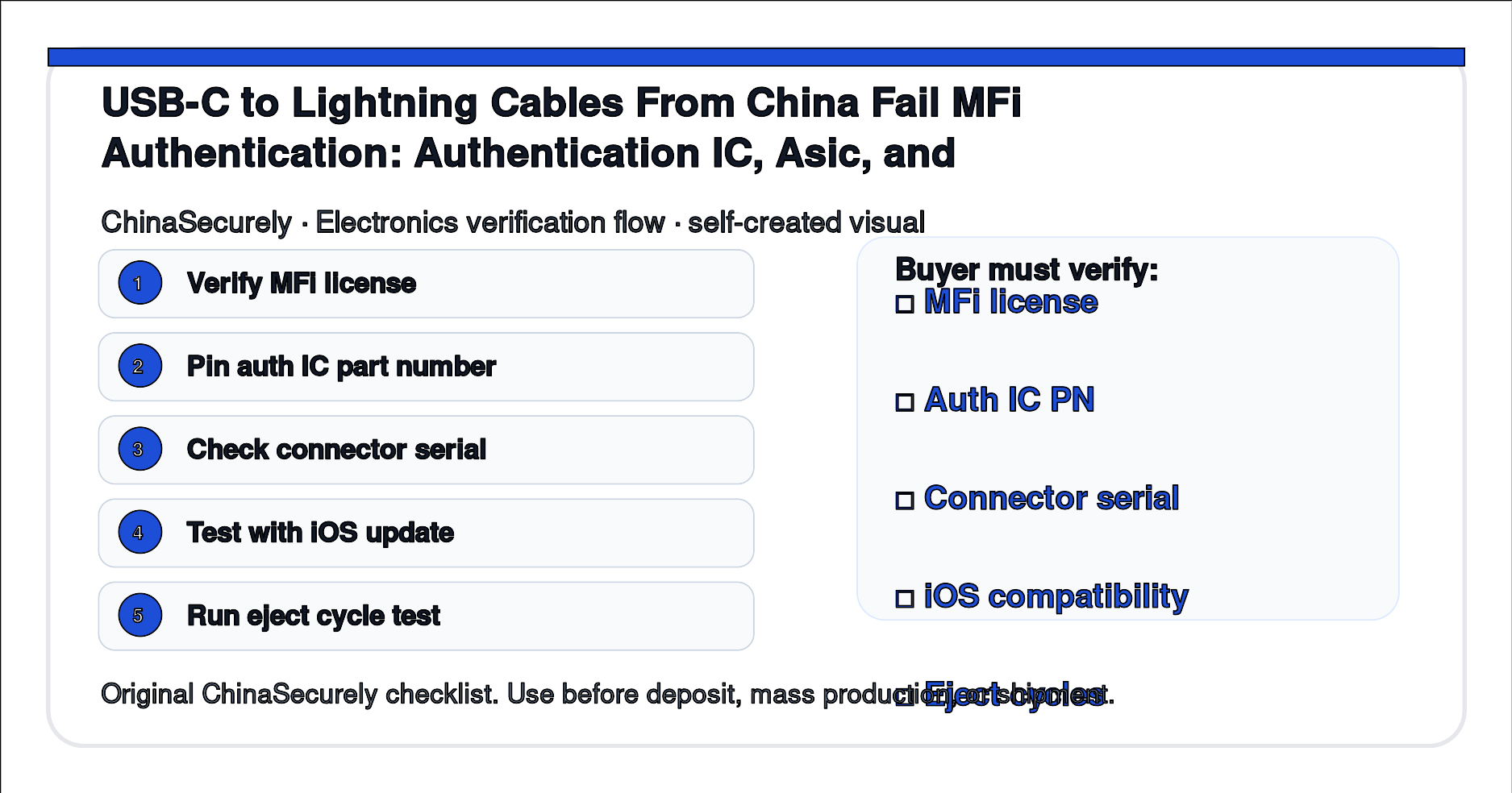
USB-C to Lightning Cables From China Fail MFi Authentication: Authentication IC, Asic, and Eject Test Checks

ChinaSecurely USB-C to Lightning cable MFi authentication verification flow

Short answer: a USB-C to Lightning cable from China that triggers the “This accessory is not supported” warning on an iPhone or iPad usually has one of three root causes: the supplier is not on Apple’s MFi licensee list, the authentication IC is missing or cloned, or the connector serial number is not registered with … Read more

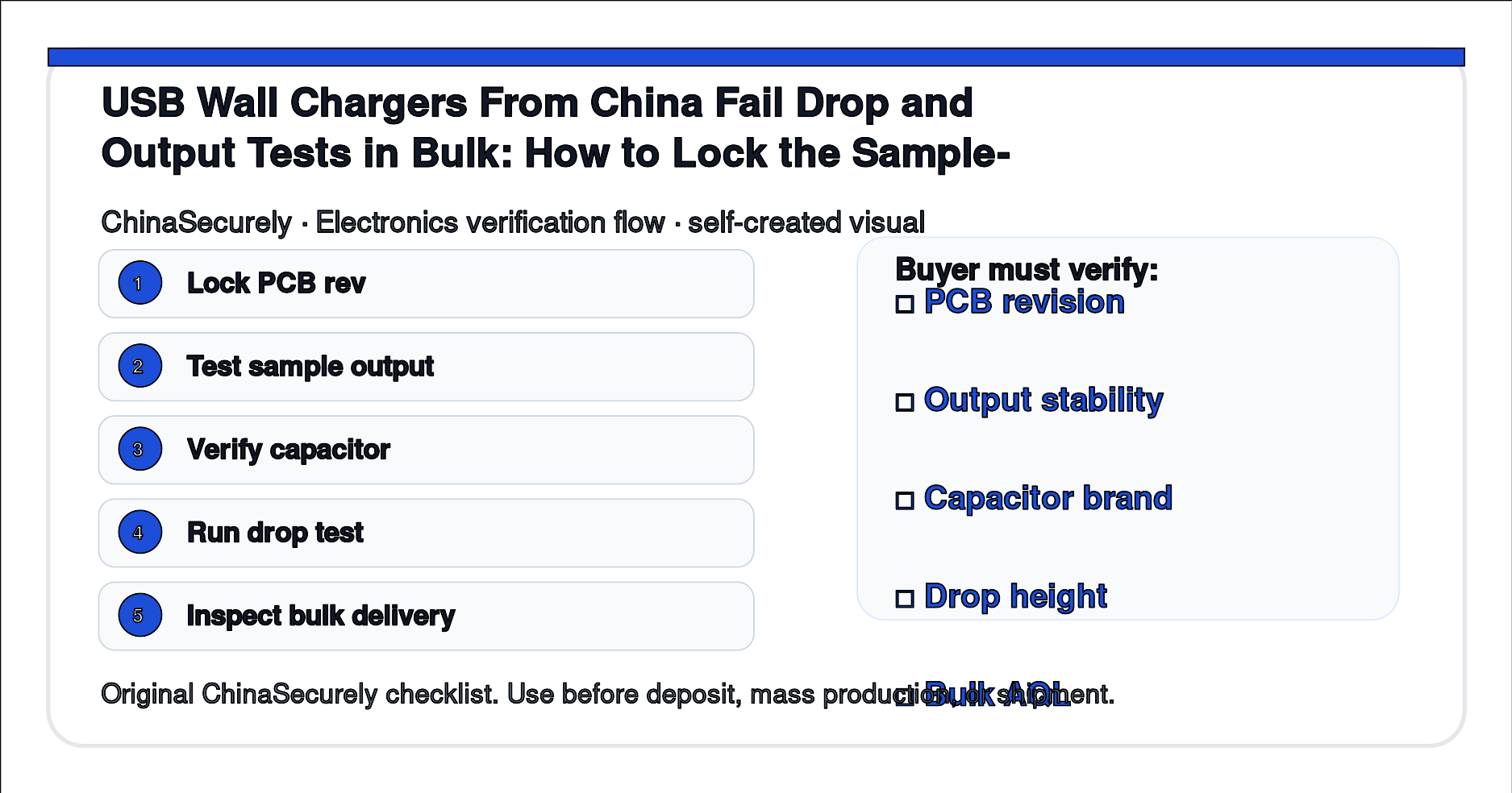
USB Wall Chargers From China Fail Drop and Output Tests in Bulk: How to Lock the Sample-to-Bulk Verification

ChinaSecurely USB wall charger drop test and output stability verification checklist for small importers sourcing from China

Short answer: a USB wall charger that passes a drop test and an output-voltage test on a 5-piece sample can fail the same tests on a 500-piece bulk run. The cause is rarely the factory lying; it is PCB revision drift, capacitor downshift, or housing material change between sample and bulk. Here is how to … Read more