Ceramic Dinnerware From China Has Pinholes in the Glaze: What Small Importers Should Check
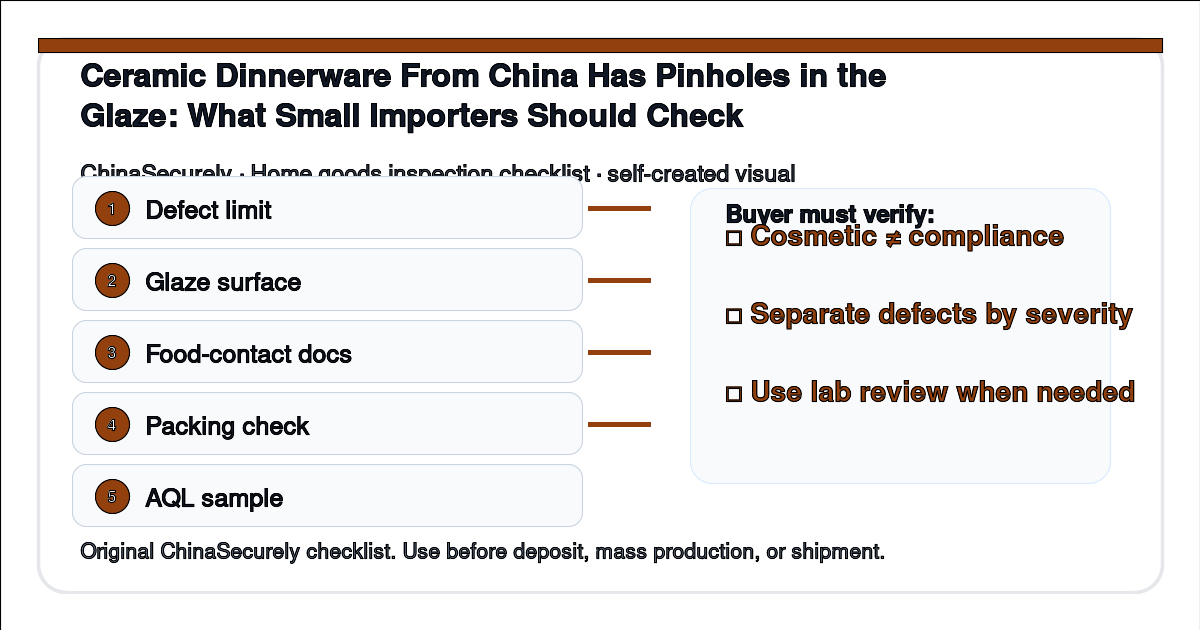
Inspection checklist for ceramic dinnerware glaze pinholes and finish defects before shipment from China.

Short answer: glaze pinholes can be a cosmetic defect, a production-process signal, or a reason to slow down and ask for testing evidence. For dinnerware, do not treat a supplier’s “food safe” statement as enough. Check the surface, define defect limits, and review food-contact requirements for your destination market. High-risk topic. Ceramic dinnerware touches food … Read more
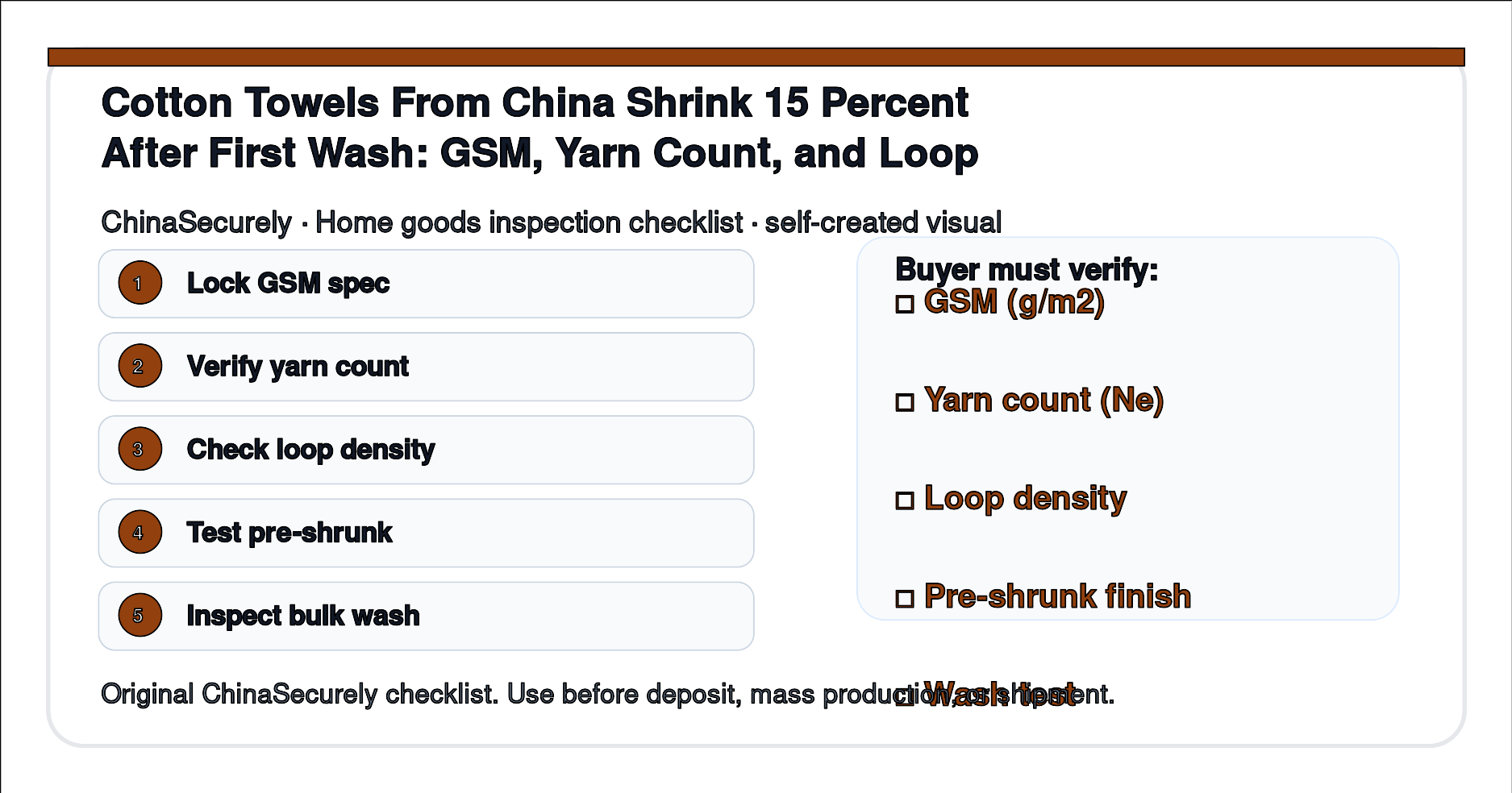
Cotton Towels From China Shrink 15 Percent After First Wash: GSM, Yarn Count, and Loop Density Checks

ChinaSecurely cotton towel GSM shrinkage and yarn count verification checklist for small importers sourcing from China

Short answer: a cotton towel that arrives at 550 GSM from a Chinese supplier can measure 470 GSM after the first wash. The cause is almost always yarn count downshift, looser loop density, or a missing pre-shrunk finish. The factory did not lie; the towel is technically cotton, and the at-delivery GSM is real. Here … Read more

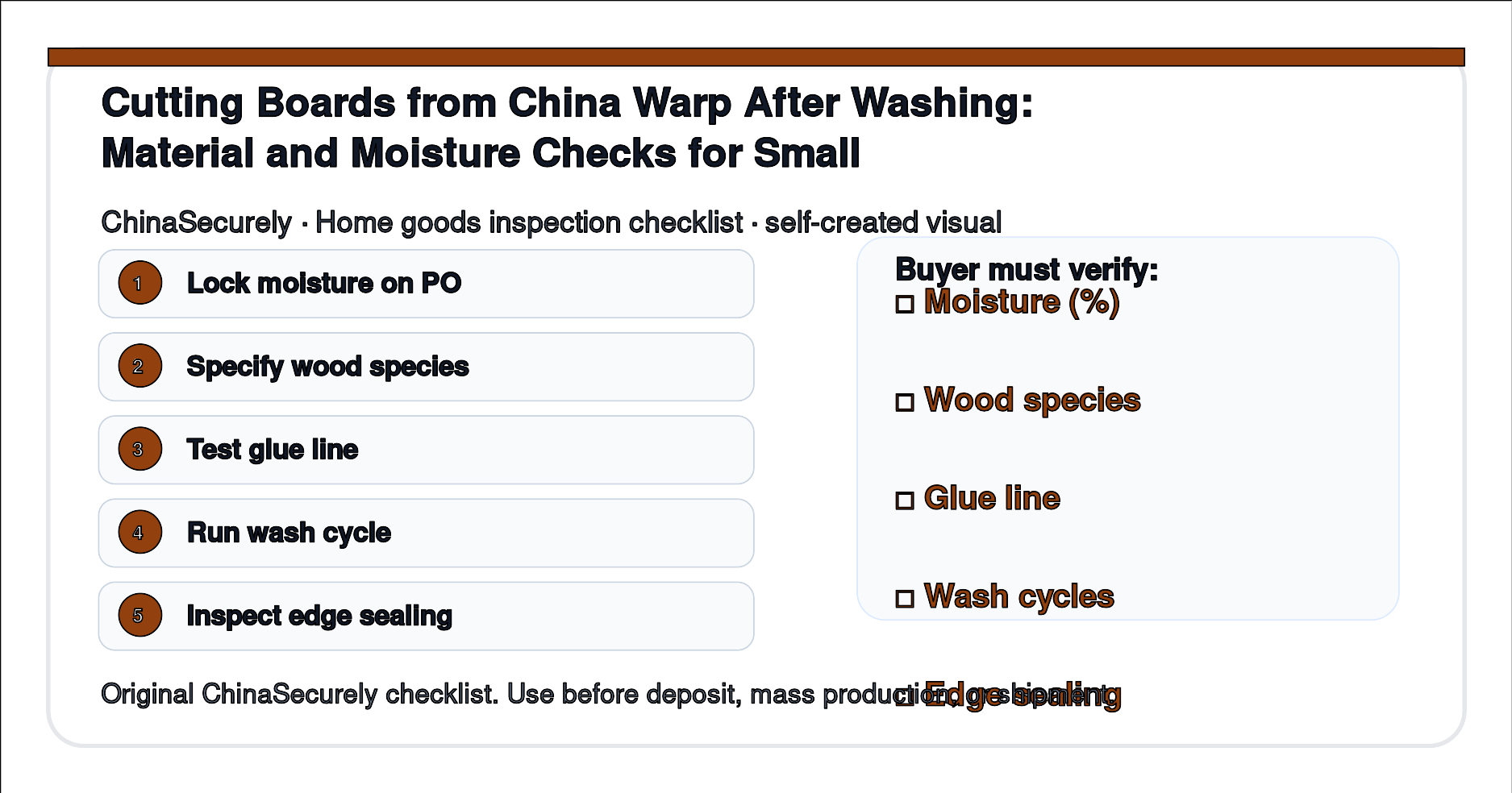
Cutting Boards from China Warp After Washing: Material and Moisture Checks for Small Importers

ChinaSecurely cutting board warp and moisture verification checklist

Short answer: a cutting board that looks flat in the supplier’s sample photo can still warp after washing if the material, thickness, moisture content, glue line, or drying process is not controlled. This is especially common when small importers buy bamboo, wood, or composite boards mainly by appearance and price. A common buyer question is: … Read more

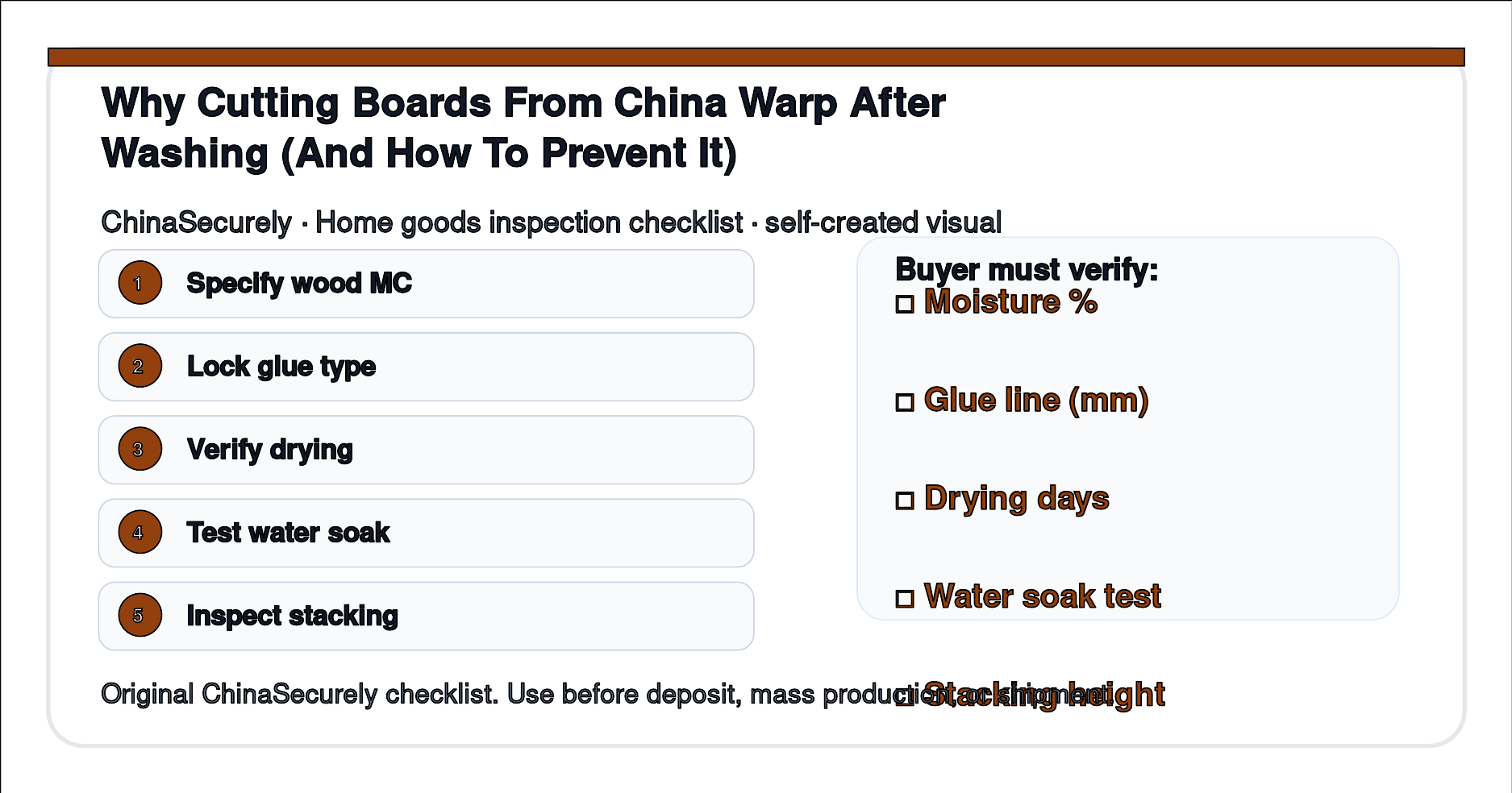
Why Cutting Boards From China Warp After Washing (And How To Prevent It)

ChinaSecurely cutting board warp after washing moisture content and glue line verification checklist

Short Answer Cutting boards from China warp after washing mostly because of two material problems: the wood isn’t properly dried before manufacturing, or the cutting board uses glued joined wood with different moisture content in each piece. Even high-quality wood will warp if it isn’t kiln dried to the correct moisture content for your climate. … Read more

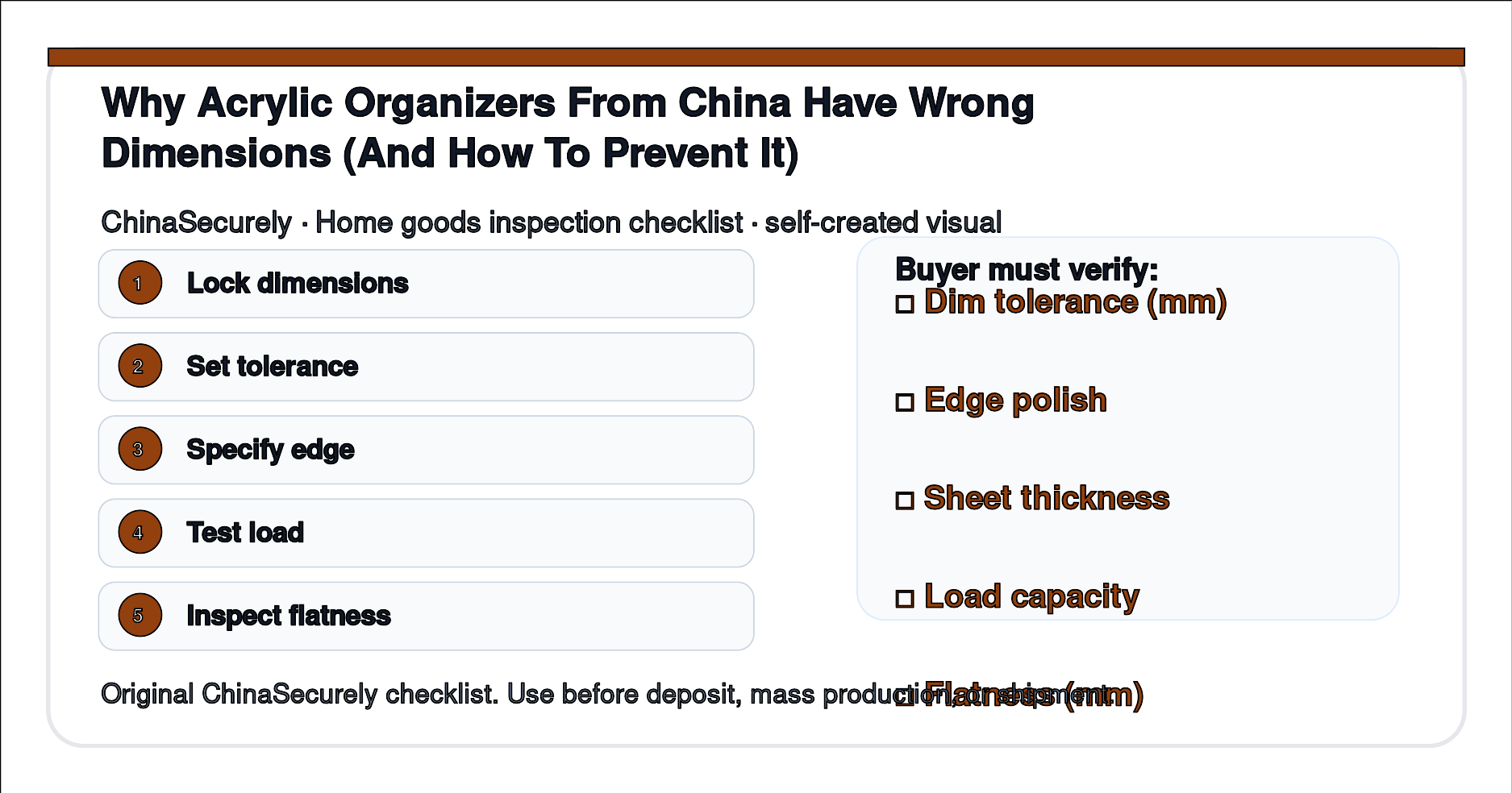
Why Acrylic Organizers From China Have Wrong Dimensions (And How To Prevent It)

ChinaSecurely acrylic organizer dimension tolerance and laser cut edge verification checklist

Why Acrylic Organizers From China Have Wrong Dimensions (And How to Fix It) Short Answer Acrylic organizers from China often end up with dimensions that don’t match your drawing or sample because most small acrylic factories cut sheets manually rather than with CNC machines, and they don’t always check tolerance after cutting. The good news … Read more

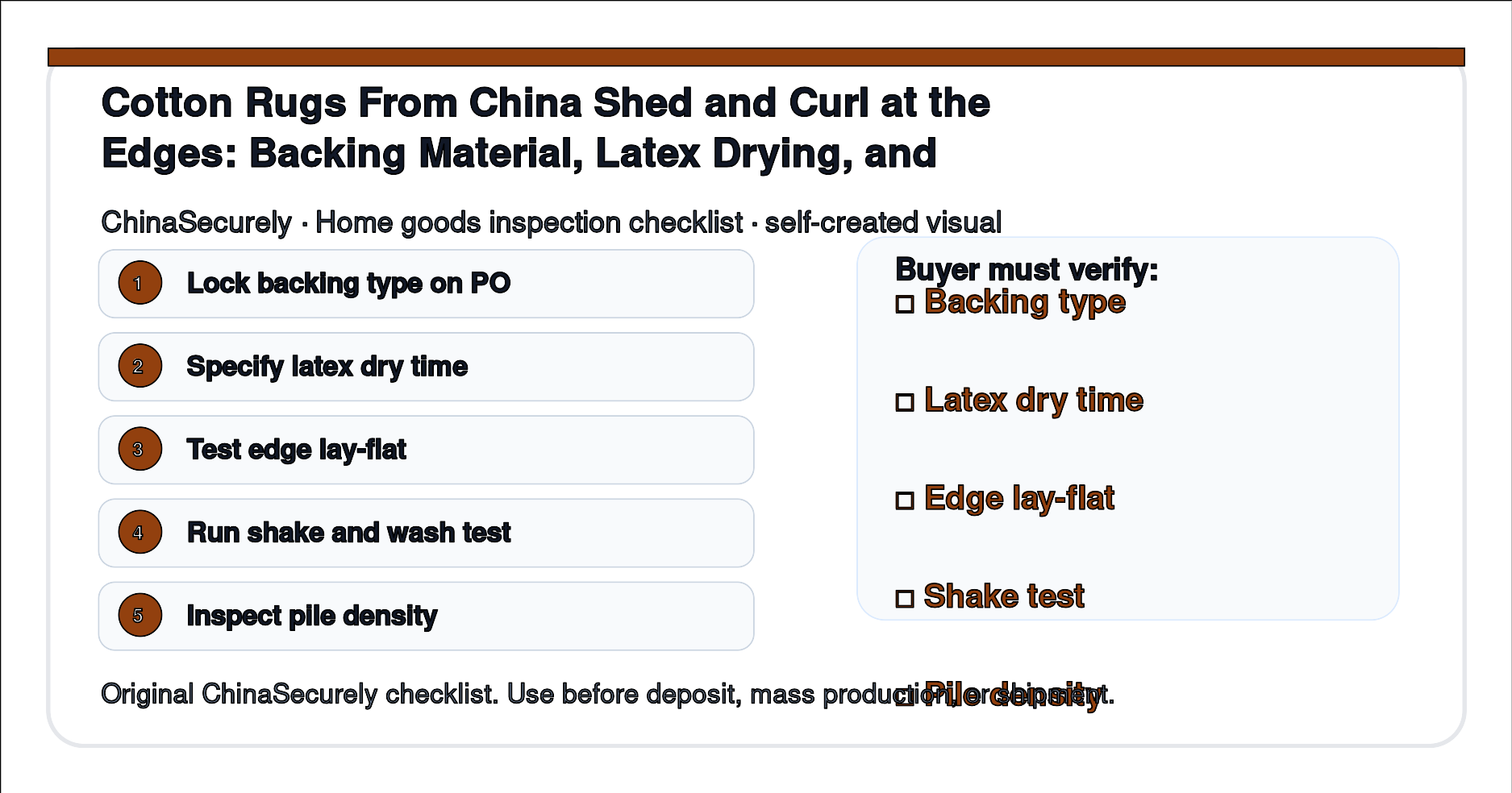
Cotton Rugs From China Shed and Curl at the Edges: Backing Material, Latex Drying, and Wash Checks

ChinaSecurely cotton rug shedding and edge curl verification checklist

Short answer: a cotton rug or runner from China that sheds fibers in the first month and curls at the edges within 30 days usually has one of three root causes: the backing latex was not fully dried before packing, the yarn twist is below the supplier’s sample, or the pile density dropped between sample … Read more

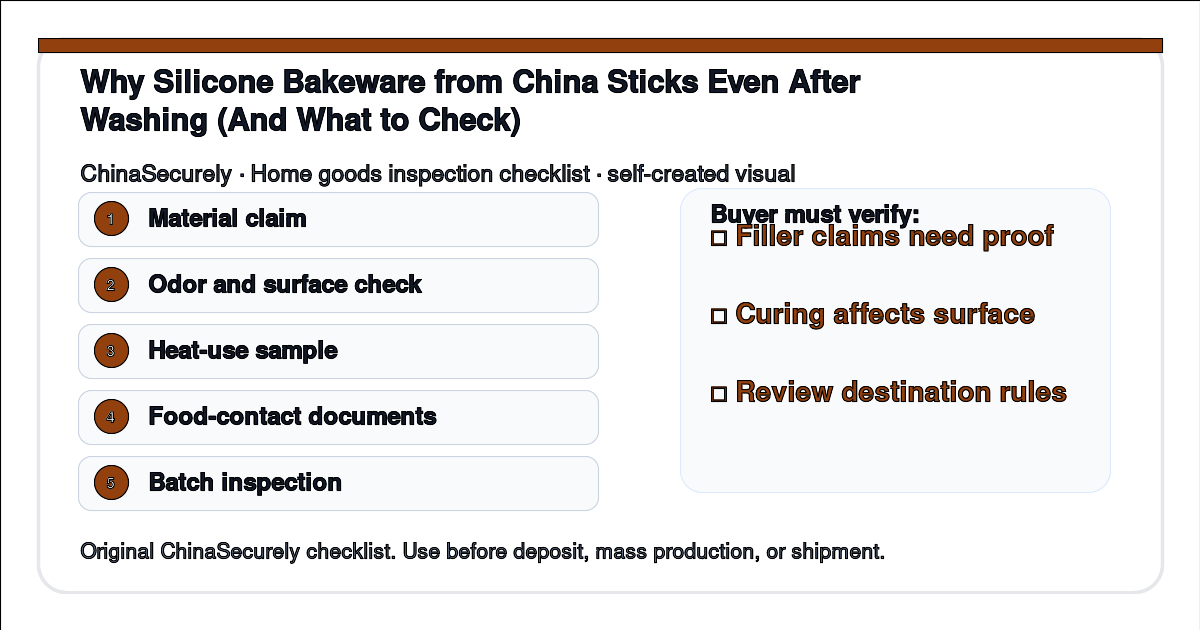
Why Silicone Bakeware from China Sticks Even After Washing (And What to Check)

Silicone bakeware sample and material-check checklist for importers sourcing from China.

Many importers have had customers complain that silicone baking mats and molds from China start sticking even after careful washing. Why does this happen, and what can you check before you place a large order? High-risk topic. Food-contact bakeware is regulated. Match supplier documents to the exact material, model, and destination market (for example US … Read more