USB-C Cables From China Fail 100W Charging: E-Marker Chip Missing or Counterfeit, and a Safer Cable Buy
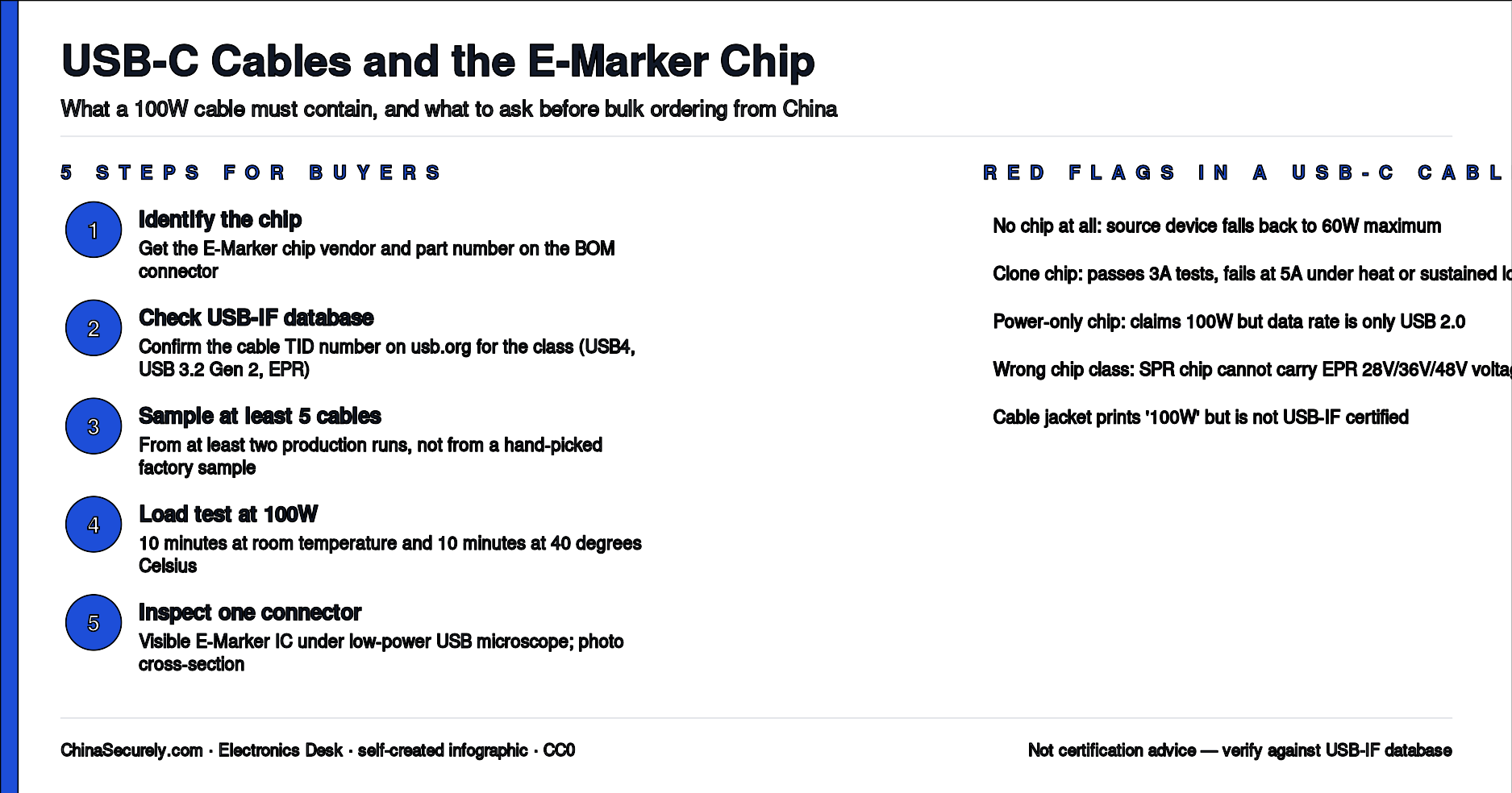
Five-step verification flow for checking whether a USB-C cable from China actually contains a real E-Marker chip and supports 100W charging, plus five red flags buyers should watch for.

Short answer: not every USB-C cable that prints “100W” or “USB PD” on the jacket actually carries 100 watts safely. The hidden piece that lets a USB-C cable carry more than 60 watts or 5 amps is an E-Marker chip inside the connector, and many Chinese suppliers ship cables without one, with a counterfeit chip, … Read more
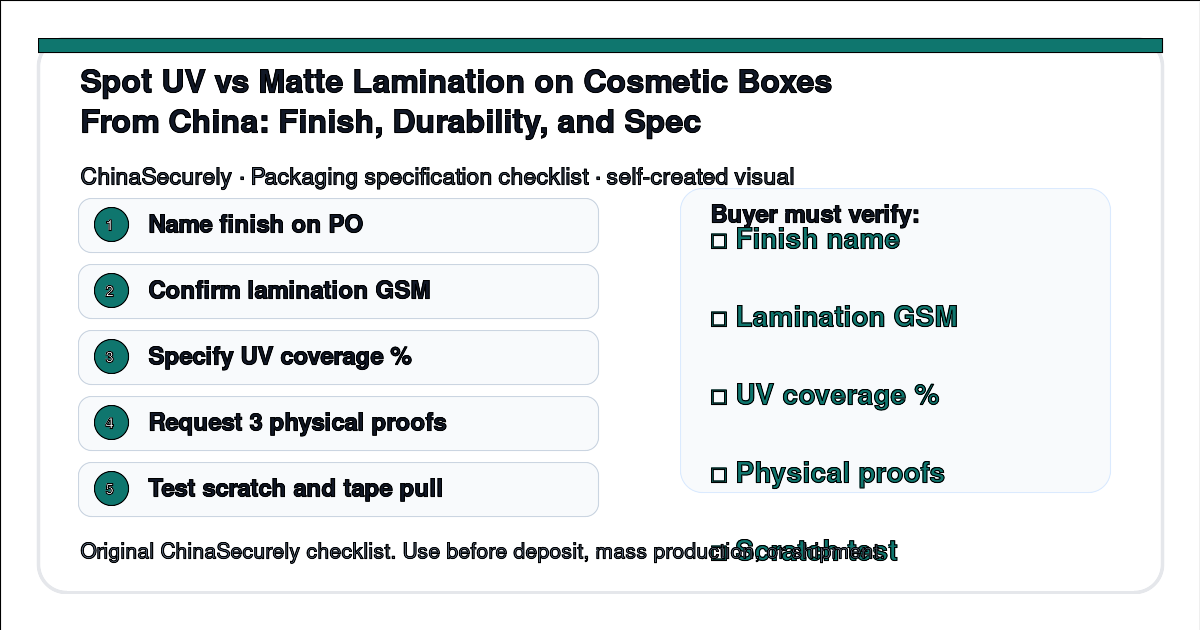
Spot UV vs Matte Lamination on Cosmetic Boxes From China: Finish, Durability, and Spec Checks

ChinaSecurely spot UV vs matte lamination cosmetic box specification checklist

Short answer: spot UV is a high-gloss varnish printed on top of matte lamination to make logos and patterns pop. Matte lamination is a thin film glued to the entire surface that gives a soft, fingerprint-resistant feel. Both finishes look premium when fresh, but they age differently. Spot UV scratches when stacked in cartons without … Read more

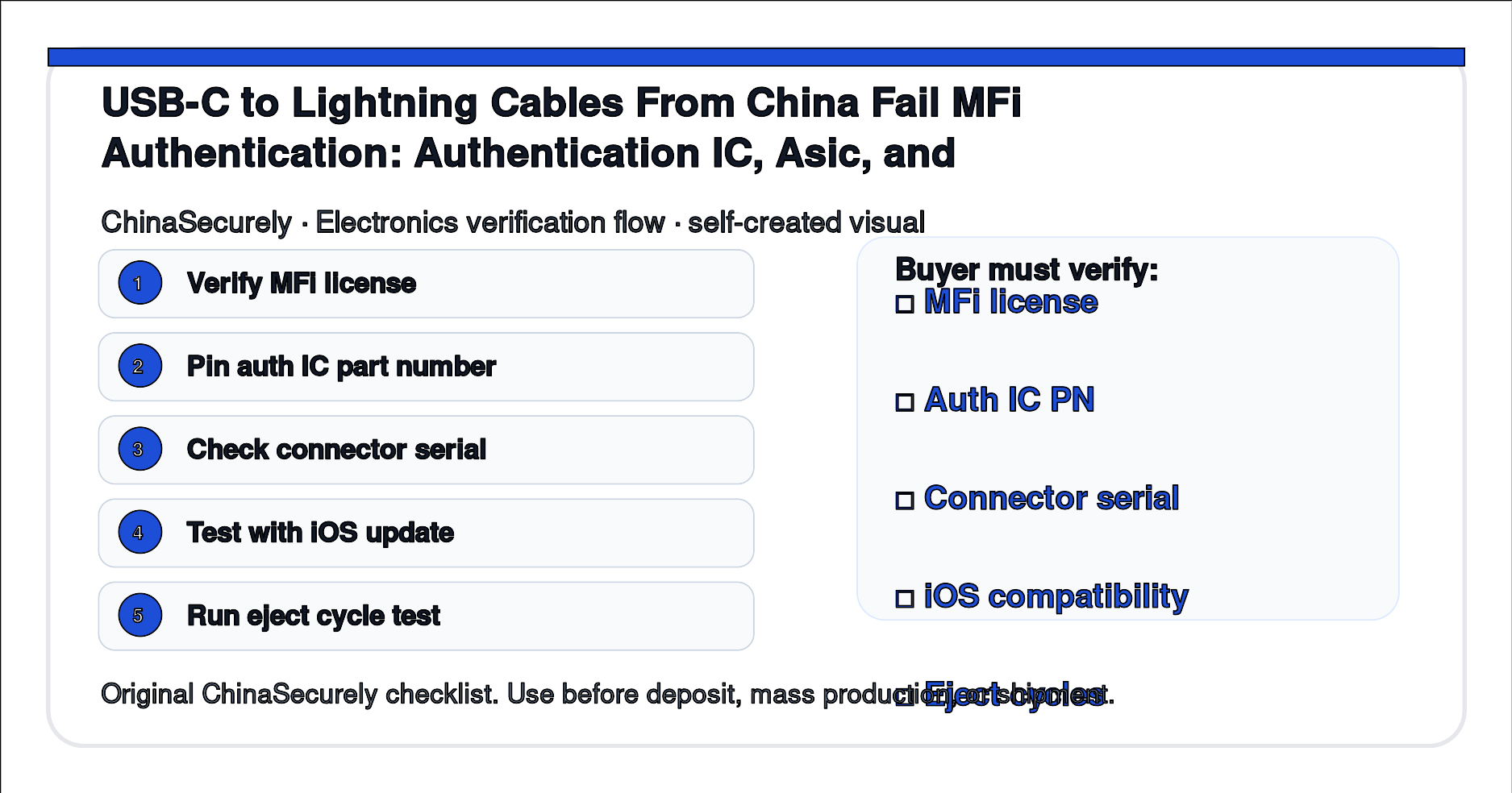
USB-C to Lightning Cables From China Fail MFi Authentication: Authentication IC, Asic, and Eject Test Checks

ChinaSecurely USB-C to Lightning cable MFi authentication verification flow

Short answer: a USB-C to Lightning cable from China that triggers the “This accessory is not supported” warning on an iPhone or iPad usually has one of three root causes: the supplier is not on Apple’s MFi licensee list, the authentication IC is missing or cloned, or the connector serial number is not registered with … Read more

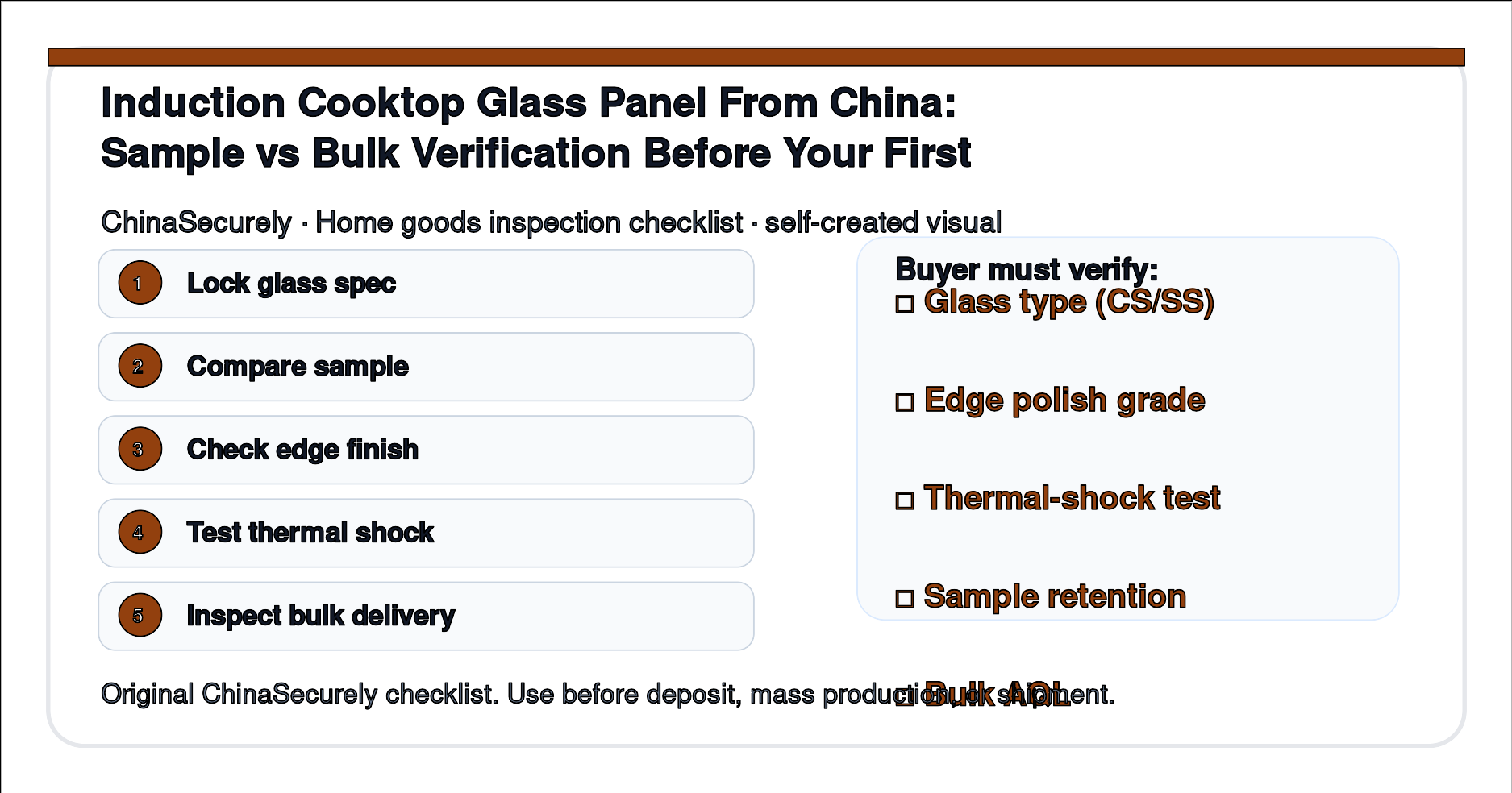
Induction Cooktop Glass Panel From China: Sample vs Bulk Verification Before Your First Order

ChinaSecurely induction cooktop glass panel sample-to-bulk verification checklist for small importers

Short answer: a sample induction cooktop glass panel from a Chinese supplier can look flawless in the lab and still arrive in bulk with edge chips, micro-cracks, a different ceramic composition, or a different polish. The panel is the single most expensive component in the cooktop, and the visual difference between a CS-grade and SS-grade … Read more

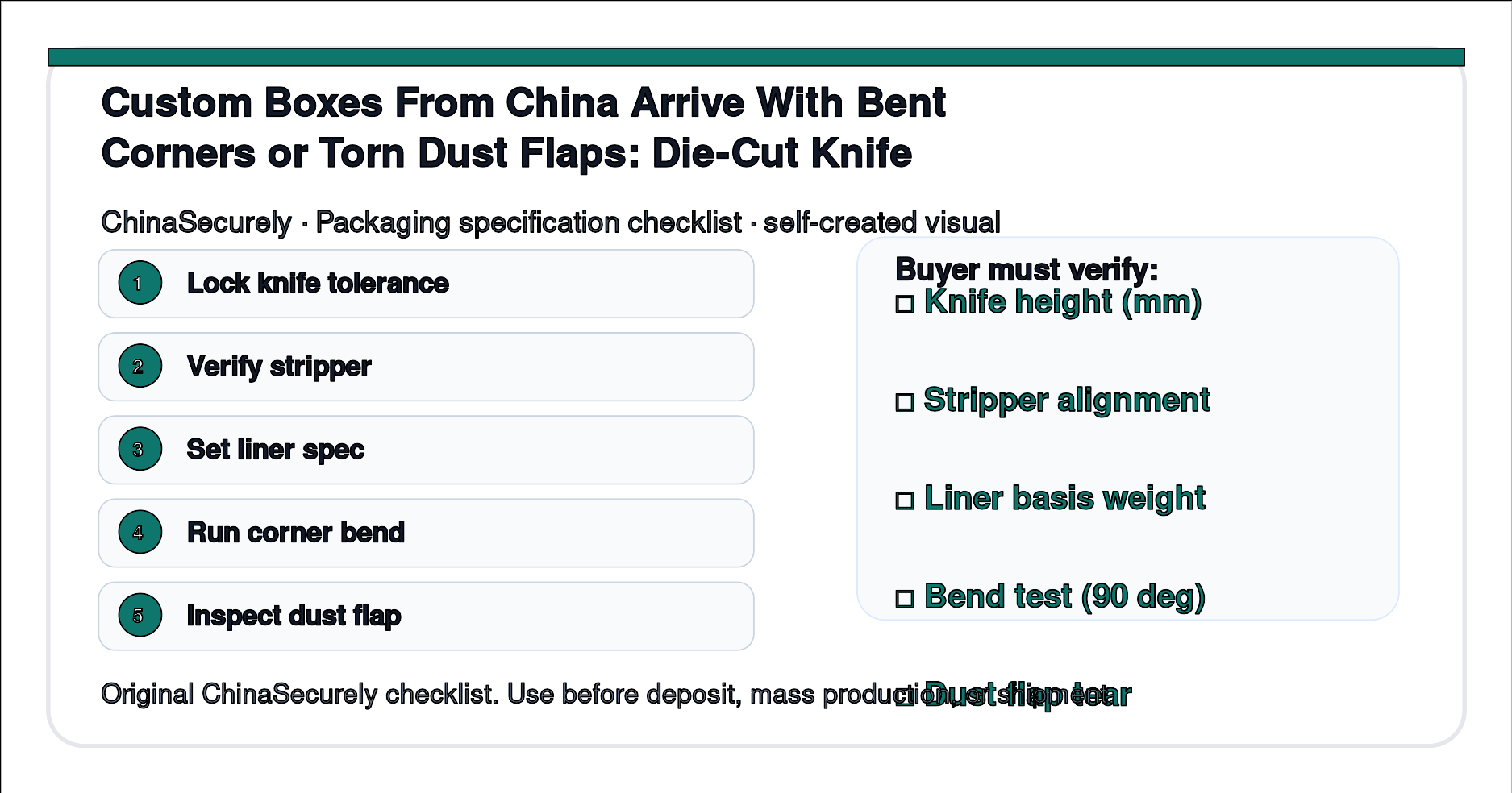
Custom Boxes From China Arrive With Bent Corners or Torn Dust Flaps: Die-Cut Knife Height and Liner Composition Checks

ChinaSecurely custom box die-cut corner bend test and dust flap tear verification checklist

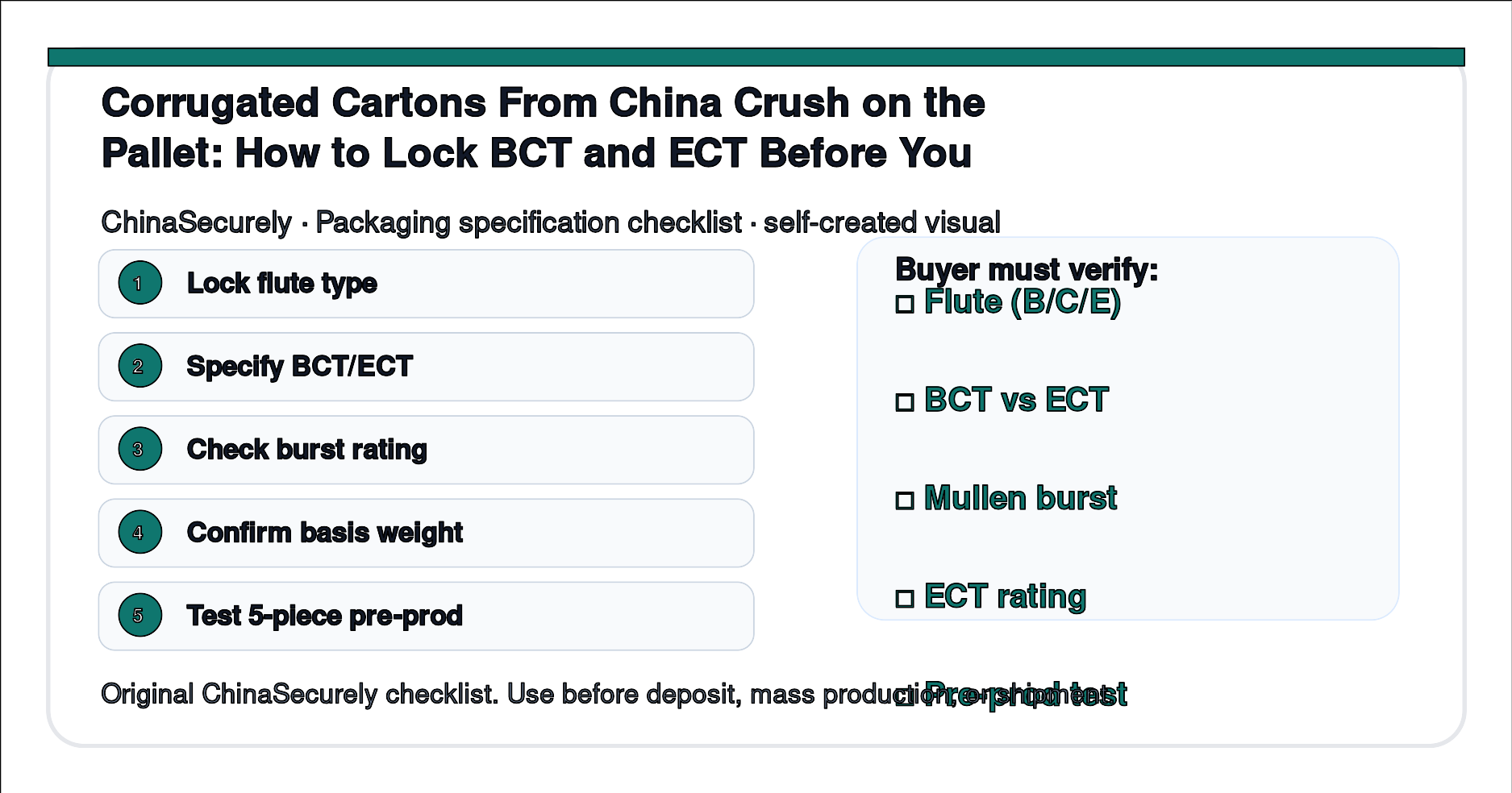
Short answer A custom corrugated mailer or product box from China that arrives with bent corners, scuffed flaps, or a white dust haze along the die-cut edge almost always fails on one of three things: the die-cut knife height is set too high, the waste-stripper is misaligned, or the die-cut board has higher recycled-paper content … Read more

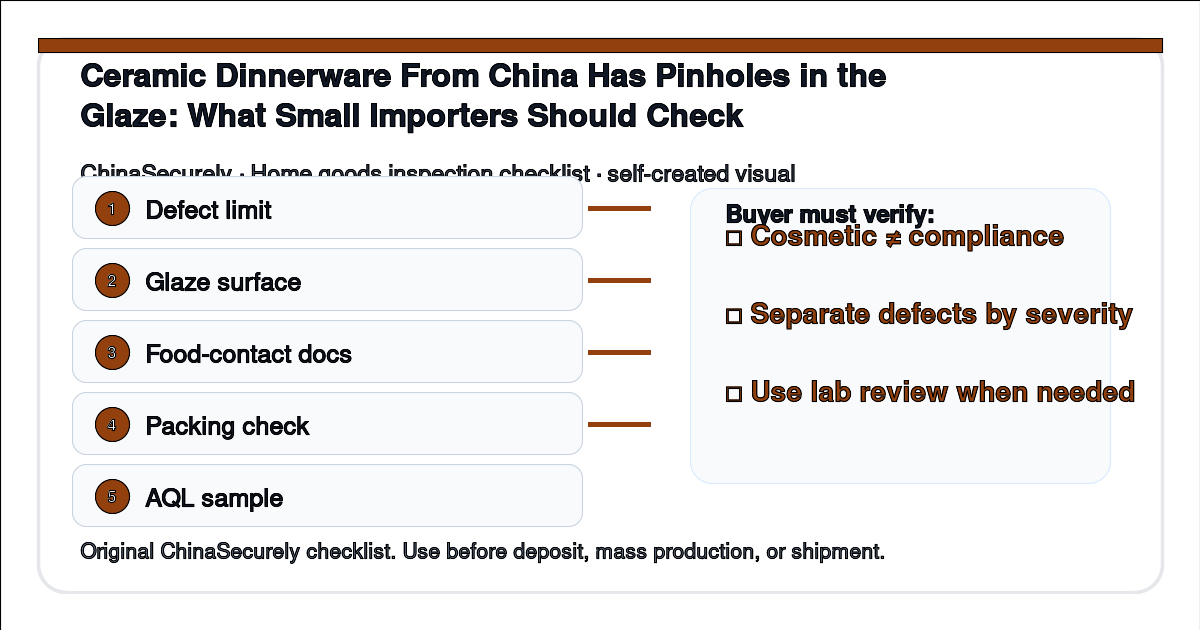
Ceramic Dinnerware From China Has Pinholes in the Glaze: What Small Importers Should Check

Inspection checklist for ceramic dinnerware glaze pinholes and finish defects before shipment from China.

Short answer: glaze pinholes can be a cosmetic defect, a production-process signal, or a reason to slow down and ask for testing evidence. For dinnerware, do not treat a supplier’s “food safe” statement as enough. Check the surface, define defect limits, and review food-contact requirements for your destination market. High-risk topic. Ceramic dinnerware touches food … Read more

USB Wall Chargers From China Fail Drop and Output Tests in Bulk: How to Lock the Sample-to-Bulk Verification

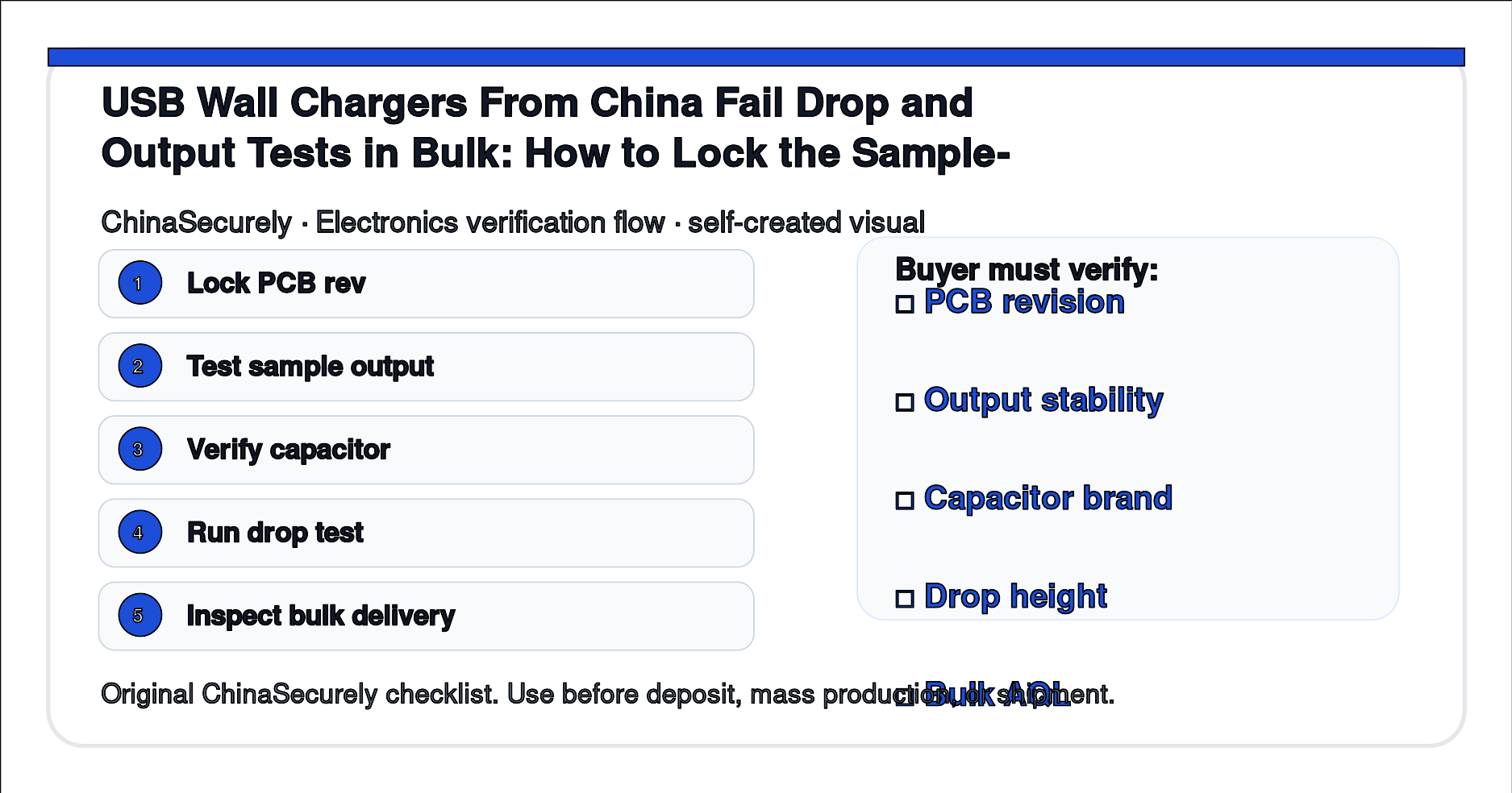
ChinaSecurely USB wall charger drop test and output stability verification checklist for small importers sourcing from China

Short answer: a USB wall charger that passes a drop test and an output-voltage test on a 5-piece sample can fail the same tests on a 500-piece bulk run. The cause is rarely the factory lying; it is PCB revision drift, capacitor downshift, or housing material change between sample and bulk. Here is how to … Read more

Cotton Towels From China Shrink 15 Percent After First Wash: GSM, Yarn Count, and Loop Density Checks

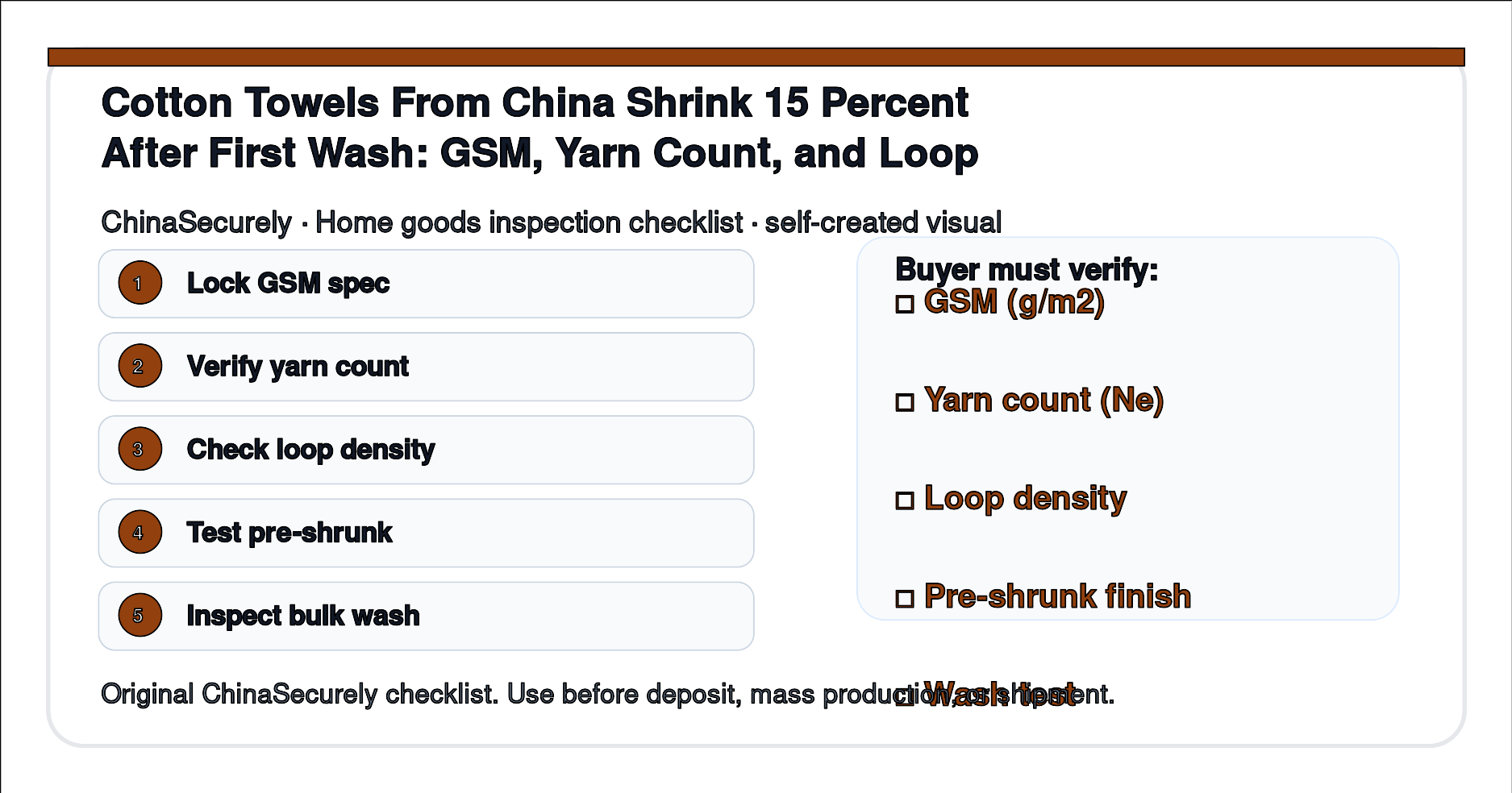
ChinaSecurely cotton towel GSM shrinkage and yarn count verification checklist for small importers sourcing from China

Short answer: a cotton towel that arrives at 550 GSM from a Chinese supplier can measure 470 GSM after the first wash. The cause is almost always yarn count downshift, looser loop density, or a missing pre-shrunk finish. The factory did not lie; the towel is technically cotton, and the at-delivery GSM is real. Here … Read more