
Short answer
A buyer question I see often is simple: “My paper tube packaging sample looked premium, but the cartons arrived with dents around the rim and soft sides. Is this a factory quality problem or a shipping problem?” The answer is usually both. A round paper tube can look strong in a product photo, but it is still a paper structure. Wall thickness, paper grade, end-cap fit, inner support, carton layout, and humidity all decide whether it survives the trip.
For a small importer, the safest fix is not to argue after arrival. Specify the tube structure before sampling, approve a packed sample, and ask the supplier to show the carton packing method before mass production leaves China.
This article is about cosmetic, candle, tea, gift, and small retail paper tubes. It is not legal or food-contact packaging advice. If the tube touches food, cosmetics, or children’s products, ask for category-specific compliance documents from a qualified source.
Why this problem happens
Paper tube packaging is made by winding paper layers into a cylinder, then adding caps, labels, printing, lamination, foil stamping, or inserts. The outside can look rigid, but the tube may still fail at three weak points: the rim, the side wall, and the carton corner.
Small buyers often approve only the empty tube sample. That misses the real risk. A tube that is fine on a desk may dent when twenty-four units are packed in a carton, stacked under other cartons, and moved through humid warehouses.
Common causes include:
- Thin wall construction chosen to meet a low target price.
- A cap that is too tight, creating pressure around the rim.
- No inner insert for a heavy product.
- Cartons with too much empty space or weak flute grade.
- Tubes packed horizontally with pressure on one side.
- Gloss lamination hiding small crush marks during inspection.
China-side explanation
In China, many paper tube suppliers quote by tube size, paper weight, finish, and order quantity. A low quote may be based on a thinner wall or a simpler carton plan. The salesperson may not mention this unless you ask because many domestic orders are shipped shorter distances or are repacked by the buyer.
The factory may also separate tube production from final product packing. One workshop makes the tube. Another team packs the finished goods. If your purchase order only says “custom paper tube packaging,” the packing team may use the normal carton method instead of a protective export method.
A useful warning sign is when the supplier can describe printing and foil stamping very clearly but cannot explain the packed carton layout. For packaging, the carton plan is part of the product.
Step-by-step solution
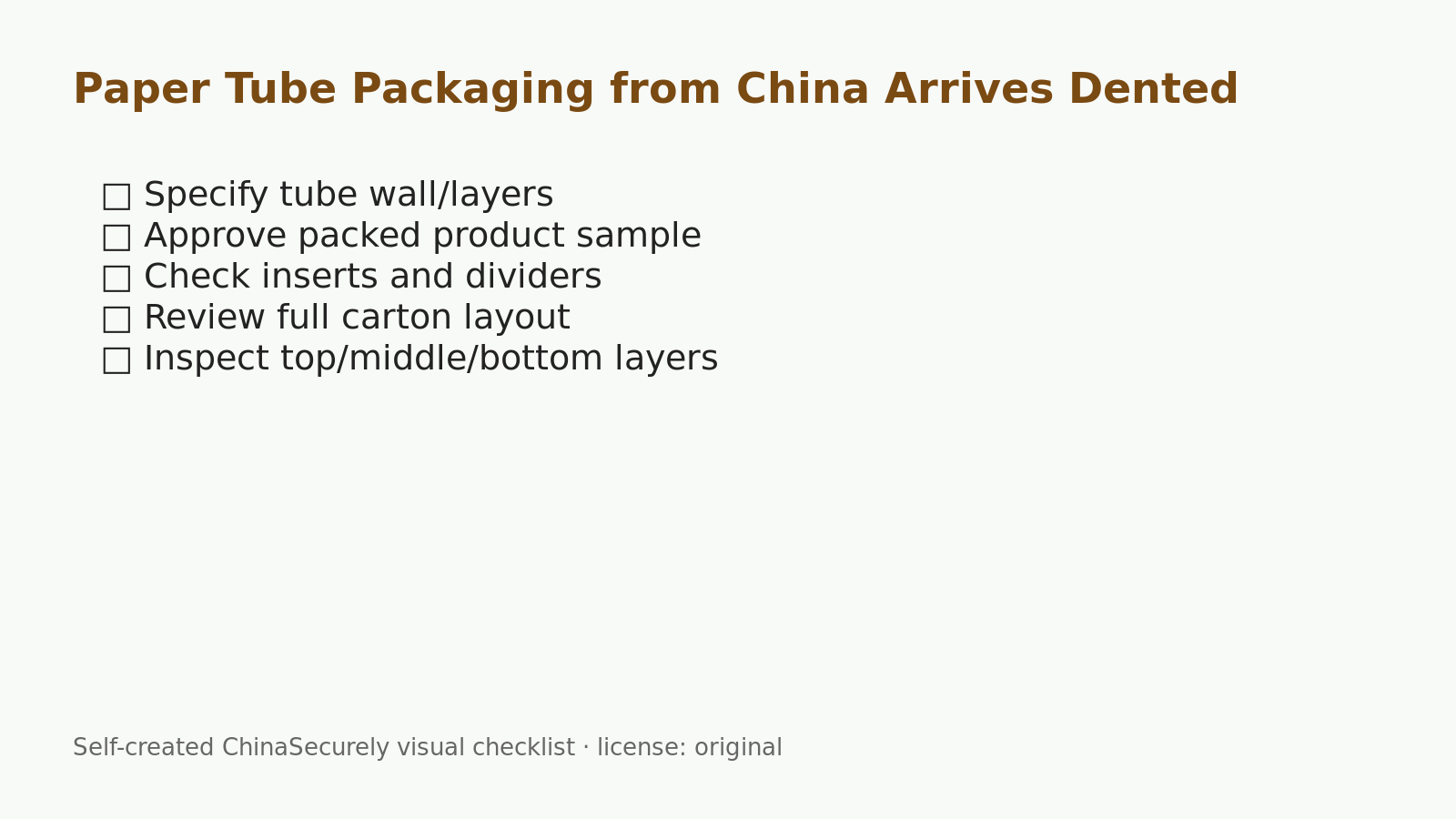
- Ask for the tube wall thickness or layer structure before ordering a sample. If the supplier cannot give a number, ask for a cut sample photo showing the paper layers.
- Approve a sample with the real product inside, not only an empty tube.
- Ask the supplier to pack the sample in the proposed inner bag, insert, divider, and export carton.
- Request photos of one fully packed carton: open carton, layer layout, closed carton, and carton marks.
- For heavier products, ask whether an inner tray, paper insert, or foam-free paper support is needed.
- During pre-shipment inspection, check both individual tubes and outer cartons. Do not inspect only the top layer.
- If the first order is small, accept a slightly stronger structure instead of pushing the last few cents out of the quote.
What to ask the supplier
Copy this message and adjust the product details:
Before we approve the paper tube packaging, please confirm the tube wall thickness, paper layer structure, cap fit, and carton packing method. Please send photos of one fully packed export carton, including the inner layout and carton size. Our concern is denting on the rim and side wall during international shipping, so please recommend whether we need an insert or stronger carton.
If the supplier replies only with “no problem,” slow down. Ask for the packed-carton evidence.
Practical checklist
| Check point | What to request | Why it matters |
|---|---|---|
| Wall strength | Wall thickness or layer structure | Thin walls dent even if printing looks good |
| Cap fit | Open and close sample several times | Over-tight caps can crush the rim |
| Product support | Insert, tray, or divider plan | Heavy products press into the tube wall |
| Carton layout | Photo of packed carton layers | Bad layout causes side dents |
| Inspection | Check top, middle, and bottom carton layers | Damage is often hidden below the top layer |
Source notes
Source URLs used as practical background:
- UPS packaging guidelines: https://www.ups.com/us/en/support/shipping-support/packaging-tips.page
- FedEx packing basics: https://www.fedex.com/en-us/shipping/packing.html
- China Packaging Federation public site, used only as China-side industry context: http://www.cpf.org.cn/
These sources support the general need for appropriate packaging and carton protection. The article’s tube-specific checklist is ChinaSecurely’s own sourcing workflow, not copied from a third-party image or table.
Related questions
Should I ask for a drop test? For fragile or premium packaging, yes, but define it as a practical supplier test or third-party inspection item, not as a guaranteed shipping result.
Can I use cheaper tubes for a trial order? You can, but do not use the trial order to judge brand packaging quality if the structure is weaker than your future retail packaging.
Light CTA
If your supplier cannot explain the tube structure and carton layout, treat the order as unfinished. A better sample approval process is cheaper than arguing about dents after the goods arrive.