
Short answer
Some minor variation is normal in ceramic mugs, but rim chips, sharp edges, cracked handles, badly misprinted logos, and packing damage should not be treated as “normal” without a written defect standard. Small importers should define major and minor defects before production, inspect samples before shipment, and document any claim by carton and defect type.
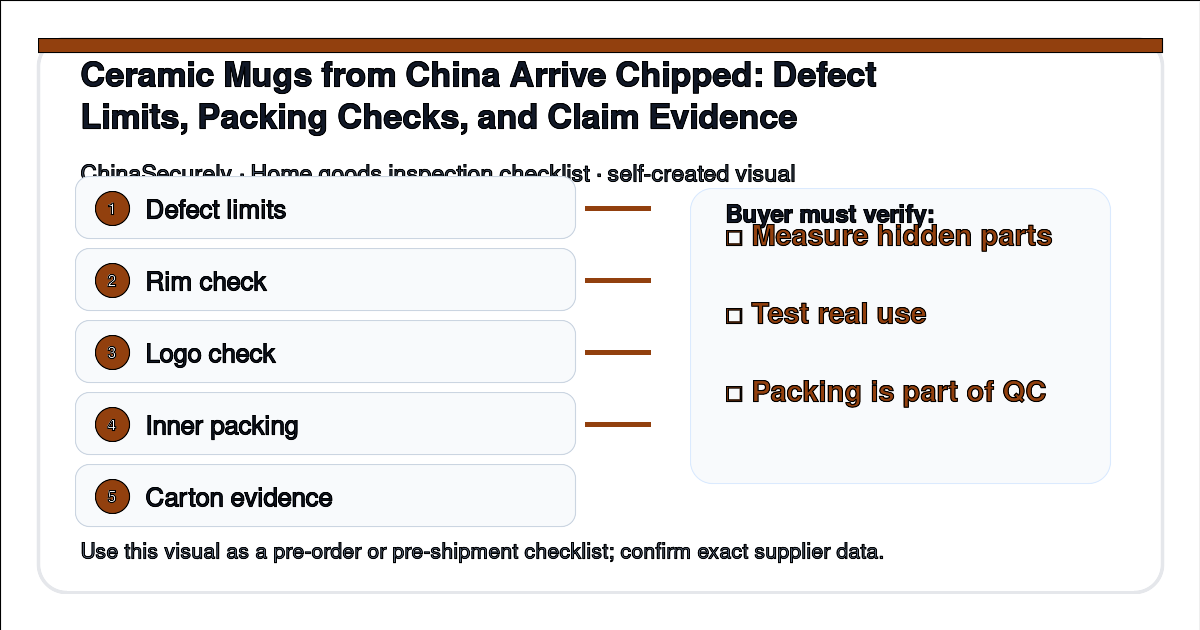
Buyer question: “I ordered custom ceramic mugs from China and some arrived with rim chips, pinholes, and imperfect logo printing. The supplier says small defects are normal. What should I accept?”
The answer depends on your approved sample, selling channel, price level, and written tolerance. If there was no written tolerance, the dispute becomes much harder.
Why this problem happens
Ceramic mugs go through forming, drying, firing, glazing, decal or print work, packing, and transport. Problems can appear at different stages: glaze pinholes, color variation, logo misalignment, handle cracks, rough rim edges, or chips from poor packing.
Shipping adds another layer. Carrier packing guidance generally focuses on cushioning, preventing movement, and protecting goods from normal handling. Mugs are fragile and often have handles, which means they need inner separation and enough carton strength.
China-side explanation
A Chinese supplier may sort mugs by a factory standard, but that standard may not match what your customers expect. A low-cost promotional mug may allow small cosmetic marks that a gift-store mug cannot accept. Logo printing also needs a separate approval standard because a structurally sound mug can still be commercially unacceptable if the logo is crooked or faded.
The safest approach is to define the defect list before mass production: which defects are rejectable, which are minor, and how many samples will be inspected.
Step-by-step solution
- Keep the approved pre-production sample as the reference.
- List critical defects: cracks, sharp chips, broken handles, unsafe edges.
- List major commercial defects: visible rim chips, badly misaligned print, wrong color, large stains.
- List minor defects only if they are truly acceptable for your sales channel.
- Ask for packing photos showing dividers, sleeves, or molded protection.
- Inspect random cartons before shipment, not only the top layer.
- Record each defect by photo, carton number, and quantity.
- For claims, separate production defects from transit breakage.
- Update the next purchase order with clearer defect limits and packing requirements.
What to ask the supplier
Copy and adapt this message:
Please confirm our ceramic mug defect standard before production. We reject cracked mugs, sharp rim chips, broken handles, unsafe edges, badly misaligned logo printing, large stains, and obvious glaze defects on the drinking area. Please send inner packing photos and inspect random cartons before shipment. If defects are found, please record defect type, quantity, and carton number.
This gives the supplier less room to hide behind a vague “normal tolerance” reply.
Mug defect and packing checklist
| Check point | Buyer decision | Why it matters |
|---|---|---|
| Rim and handle | Reject sharp chips and cracks | These affect safety and reviews |
| Logo print | Define alignment and color limits | Custom mugs are judged by appearance |
| Glaze area | Check drinking rim and visible face | Small marks may become customer complaints |
| Inner packing | Each mug separated and supported | Prevents handle and rim damage |
| Claim evidence | Photo, carton number, quantity | Makes negotiation more factual |
Cost and trade-off notes
A stricter defect standard may increase sorting cost or unit price. Better inner packing can also increase carton volume. For a cheap giveaway mug, the buyer may tolerate small cosmetic marks. For retail, gift, or brand merchandise, visible defects can cost more than the savings.
Do not ask the supplier to meet a premium standard while buying the cheapest grade unless the quote clearly includes sorting and better packing.
Sources and source status
- FedEx packing guidance for cushioning and protecting fragile shipments: https://www.fedex.com/en-us/shipping/packing.html
- UPS packaging support page, used as a secondary general packing reference; access may need manual review from some locations: https://www.ups.com/us/en/support/shipping-support/packaging-tips.page
Related questions
Is 100% perfect ceramic realistic?
Usually no. But critical defects and obvious commercial defects should be defined and controlled.
Should I inspect before shipment?
Yes, especially for custom printed mugs. Once the mugs arrive broken or misprinted, the claim becomes slower and more expensive.
Can I accept small pinholes?
Maybe, if they are not on the drinking rim or main visible area and your customer expectations allow it. Put that decision in writing before production.
Light CTA
For ceramic mugs, write your defect standard before the factory packs the cartons. After arrival, “normal tolerance” is a much harder argument to win.